

What are the risks and best practices associated with cyanobacteria?
Don’t panic: cyanobacteria are organisms that are naturally present in aquatic environments, and they develop under certain environmental conditions (sunshine, high temperatures, slow-moving currents, shallow water…).
Their presence has nothing to do with pollution.
They are not algae, either, though they are often confused with them.
Are they dangerous?
Like wild mushrooms and plants, they are not all dangerous and not all of them secrete neurotoxins. However, as toxicity cannot be detected with the naked eye, it is important to know what to do to stay safe.
In rivers, it is the benthic forms of cyanobacteria that may be present.
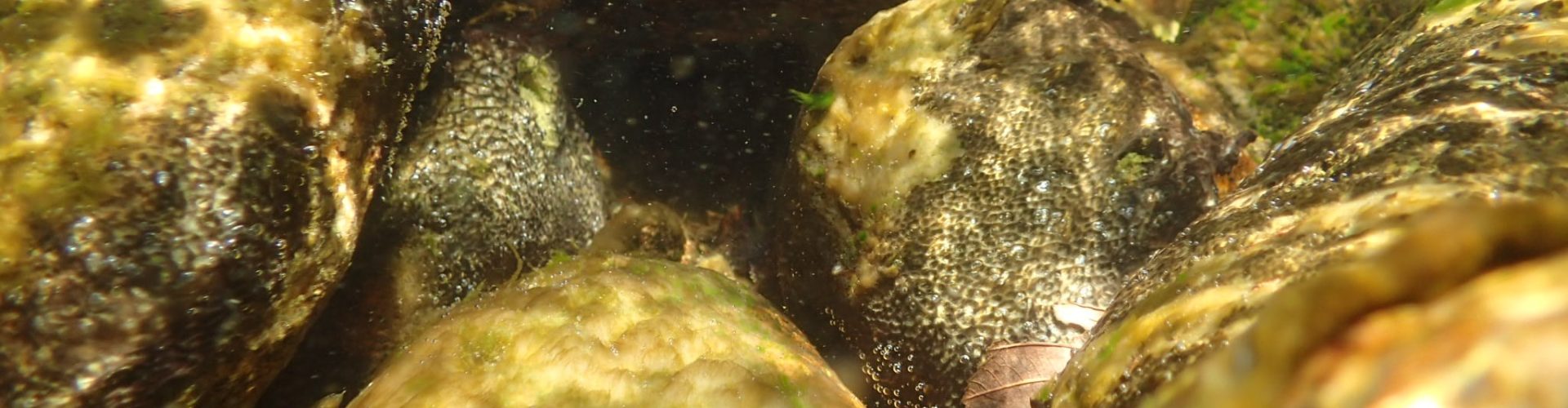
They develop in the form of a “biofilm” adhering to a surface (pebbles, sticks etc.).
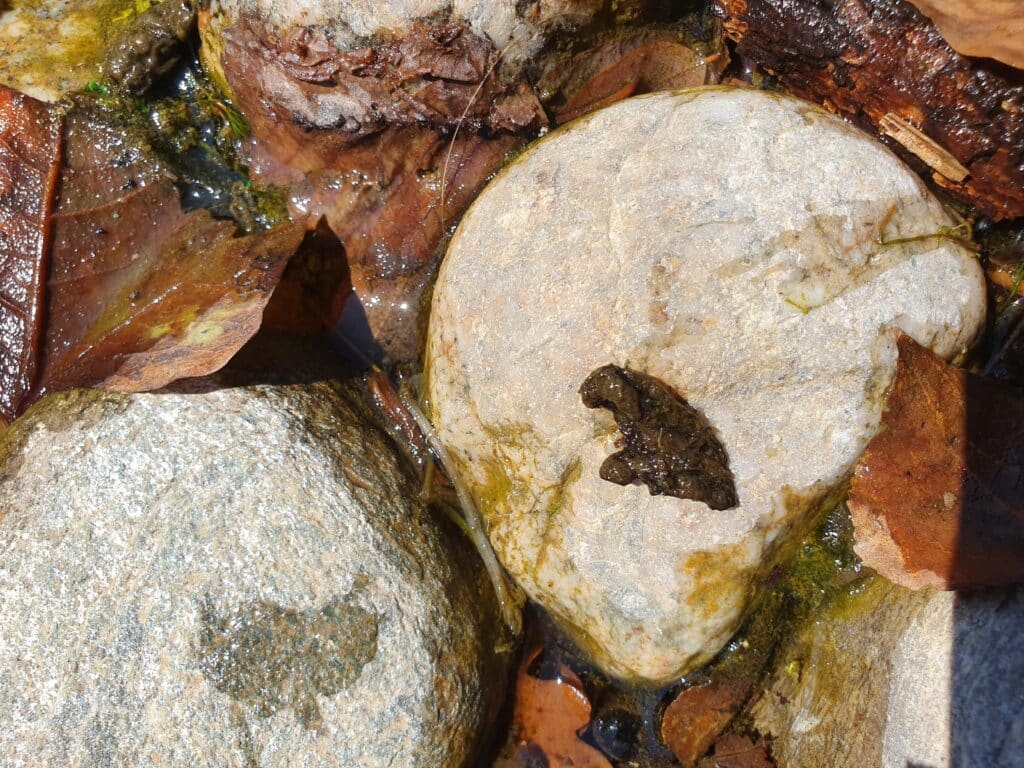
When they die, they become detached and form “flocs” (accumulations on the surface of the water – see photo), which can build up in slow-moving or stagnant areas.
Toxicity only occurs if the biofilm or floc is ingested, which is why pets and young children are more at risk, as they are more likely to put pebbles or sticks coated with biofilm in their mouths or to ingest flocs.
Are they present in our rivers?
Proliferations of cyanobacteria are possible in our rivers, but they remain rare and very localised: the areas where biofilm is produced or flocs accumulate can be concentrated in a few square metres.
As benthic cyanobacteria have a very low concentration in the water, we do not look for these organisms and their potential toxins when analysing the “bathing quality” of river water. And it is not possible to monitor the whole length of our rivers in detail.
How can we protect against them?
Knowledge of the risk and good river practices are the main methods of prevention, together with measures to combat drought and warming water.
The precautions below are highly recommended for everyone throughout the summer:
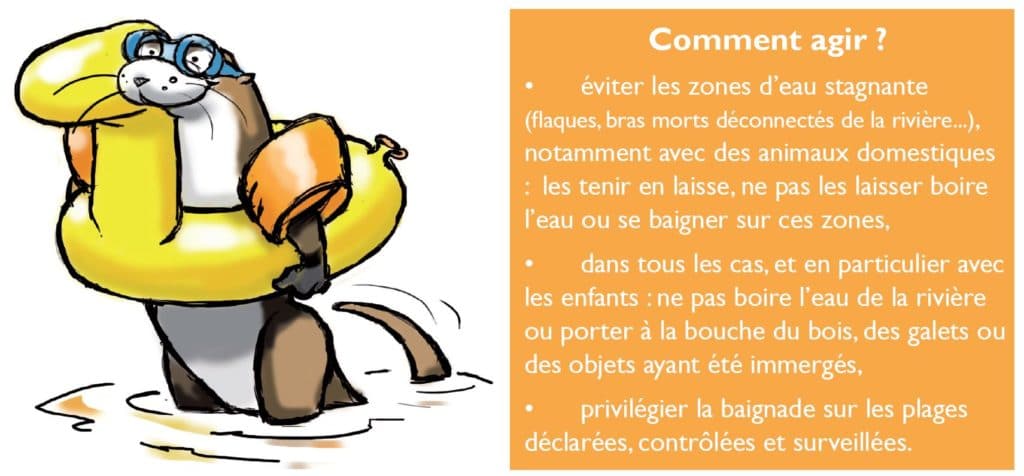
Best practice: 2023 prevention poster – regional health agency
Find out more: Benthic cyanobacteria information sheet 2023 – regional health agency
What about lakes?
Best practice: Prevention poster – regional health agency
Find out more: Planktonic cyanobacteria information sheet – regional health agency
Article updated on 30/06/2023