

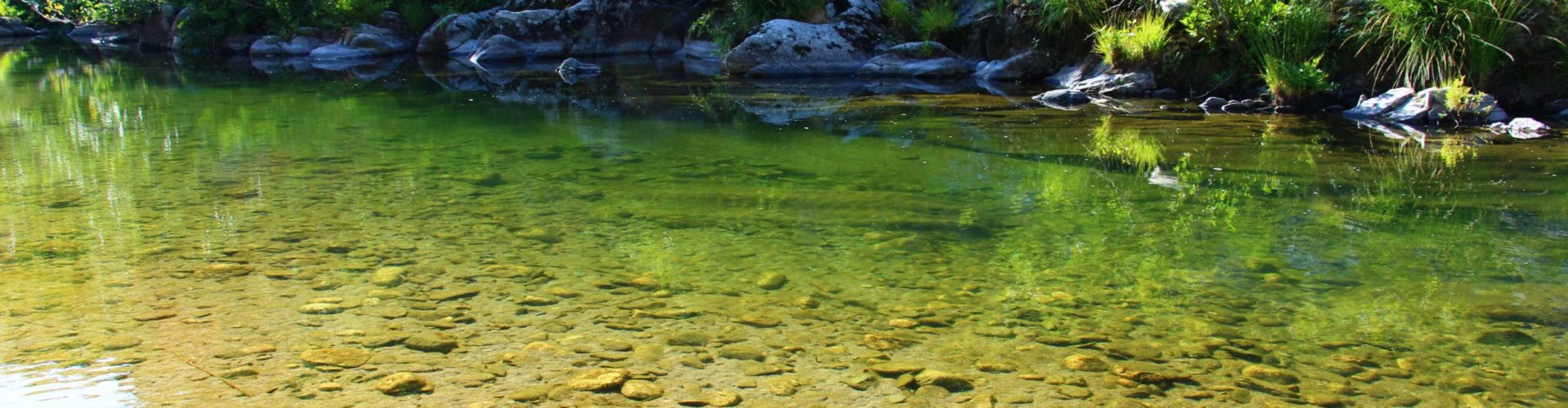
Thanks to their wide variety of habitats, and despite the alternating harsh conditions of floods and droughts, our rivers are home to a great wealth of animal and plant life.
Adapted to the wide variations in water levels, species characteristic of dry environments alternate with wetland species.
Many are protected and qualify as bioindicators: the presence of these particularly demanding and/or fragile species bears witness to a high-quality aquatic environment.
The best known are:
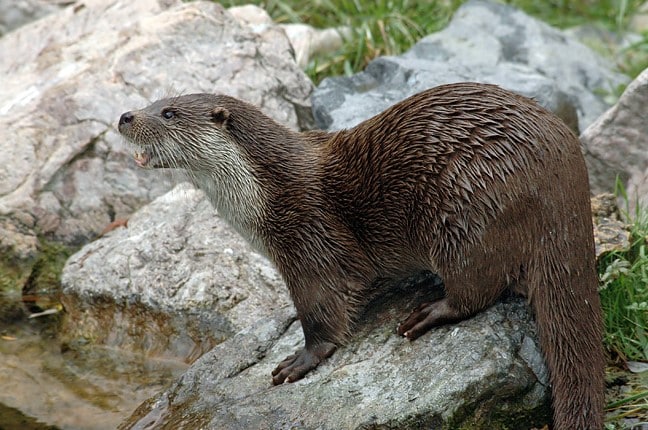
iconic mammals such as European otters and beavers,
amphibians,
aquatic insects, whose larvae provide food for fish,
snakes such as the viperine water snake,
birds, including birds of prey (kingfisher, white-throated dipper, Egyptian vulture and Bonelli’s eagle…).
Photo: European otter – credit N. Dupieux PNR Monts d’Ardèche
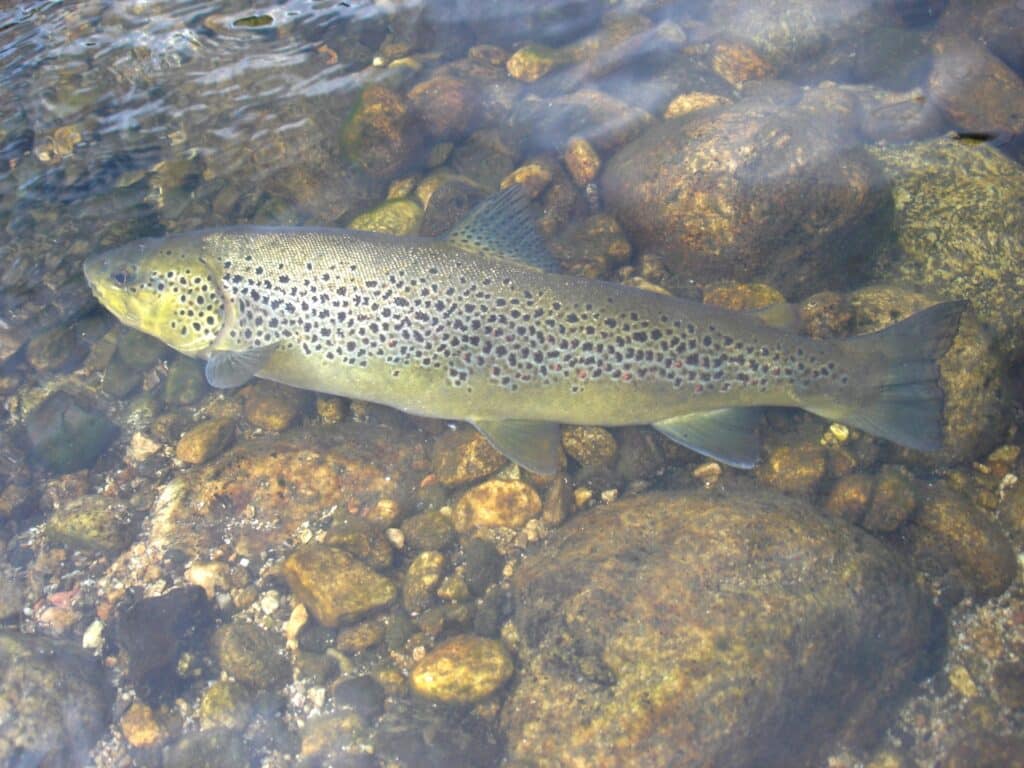
When it comes to fish, we find brown trout, of course, but also Mediterranean barbel, well-adapted to low water levels,
and Zingel asper, a small endemic fish threatened with extinction, with the only individuals remaining in the world found in the Ardèche, Durance, Drôme and Doubs basins.
Migrators such as river herring and eels swim up our rivers to reproduce or grow.
Photo: Brown trout – credit Fédération de Pêche 07
This ecological richness also provides a number of services.
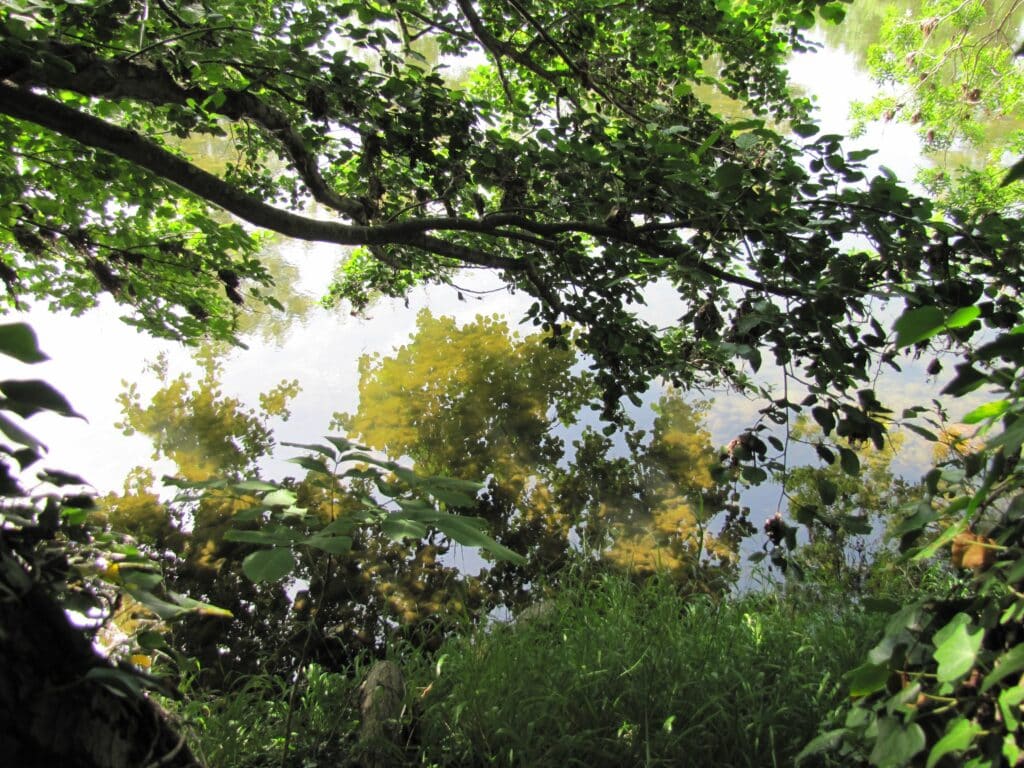
Did you know, for example, that riverside trees, sand and pebbles all contribute actively to good water quality?
By filtering the water and consuming organic matter, they supplement and finish the work of water treatment plants.
Trees also help to regulate water and air temperatures with the shade of their leaves and through evapotranspiration.
All these animal and plant species interact with each other, within or around the river.
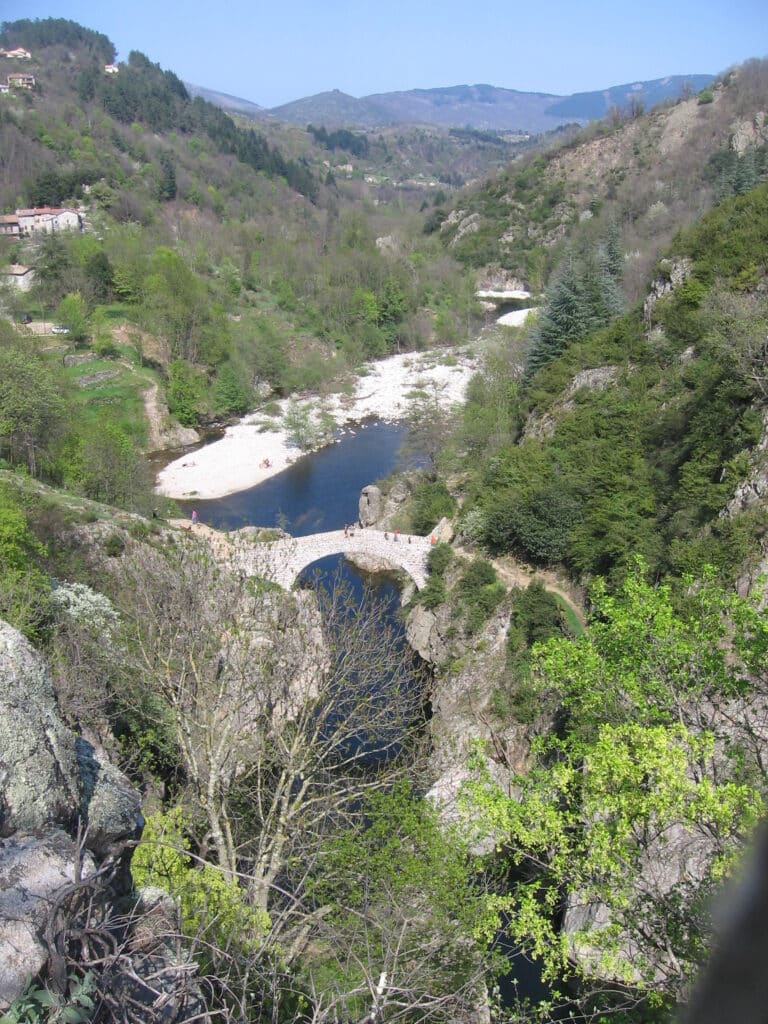
BATHING IN NATURAL ENVIRONMENTS
So let’s remember that if the rivers of the Ardèche basin are so attractive, it’s because they are rich, well-preserved natural environments.
Thousands of people visit these sites every summer: respect the river and help to preserve it!